Medium Choice After Expanded Media
In the expanded-media age, the artist’s medium is no longer a neutral tool. It is a visible decision, a conceptual argument, and often the place where the real meaning of the work begins.
Can any medium still be innocent once every medium is available?
In older art systems, a medium often came before the artist’s full conceptual decision. A painter painted because they were trained as a painter. A sculptor sculpted because sculpture was the inherited language. The medium was almost invisible because it was assumed.
Now the situation is different. Painting, video, installation, performance, photography, archives, NFTs, sound, Ai, code, all exist beside each other. Because of that, the choice of medium is no longer neutral. It becomes part of the artwork’s meaning before the subject even appears.
The medium now asks the artist a question:
Why should this idea become a painting, instead of a video, an object, a website, a performance, a data system, or a found image?
That is the pressure of contemporary art.
Painting still matters, but only when the artist knows why painting is the necessary form. Painting is no longer automatically justified by tradition. It has to earn its place.
A painting is not only pigment on canvas if it begins as a iPhone photo, gets digitally edited, becomes a projected image, is painted by hand, then circulates back online as documentation. The real medium is the whole chain: camera, screen, file, hand, paint, canvas, gallery, Instagram, archive.
That is the post-medium condition: not the death of medium, but the collapse of simple medium categories.
Medium specificity vs. post-medium
Modernist painting often defended itself through medium specificity. Clement Greenberg’s argument was that painting should focus on what made painting different from other arts: flatness, the canvas surface, the shape of the support, and the material properties of pigment. In that view, painting became strongest when it stopped pretending to be sculpture, theater, literature, or illusionistic space.
That logic was useful because it gave painting a clear identity:
Painting = flatness, surface, pigment, optical experience.
But contemporary art breaks that identity apart.
Rosalind Krauss’s idea of the post-medium condition is useful here. The point is not simply that artists can mix anything with anything. The stronger version is that artists must find a new kind of specificity after medium purity has collapsed. Krauss uses the idea of differential specificity, where the artwork gains meaning from how it activates, combines, or critiques older medium forms rather than pretending any one form is pure.
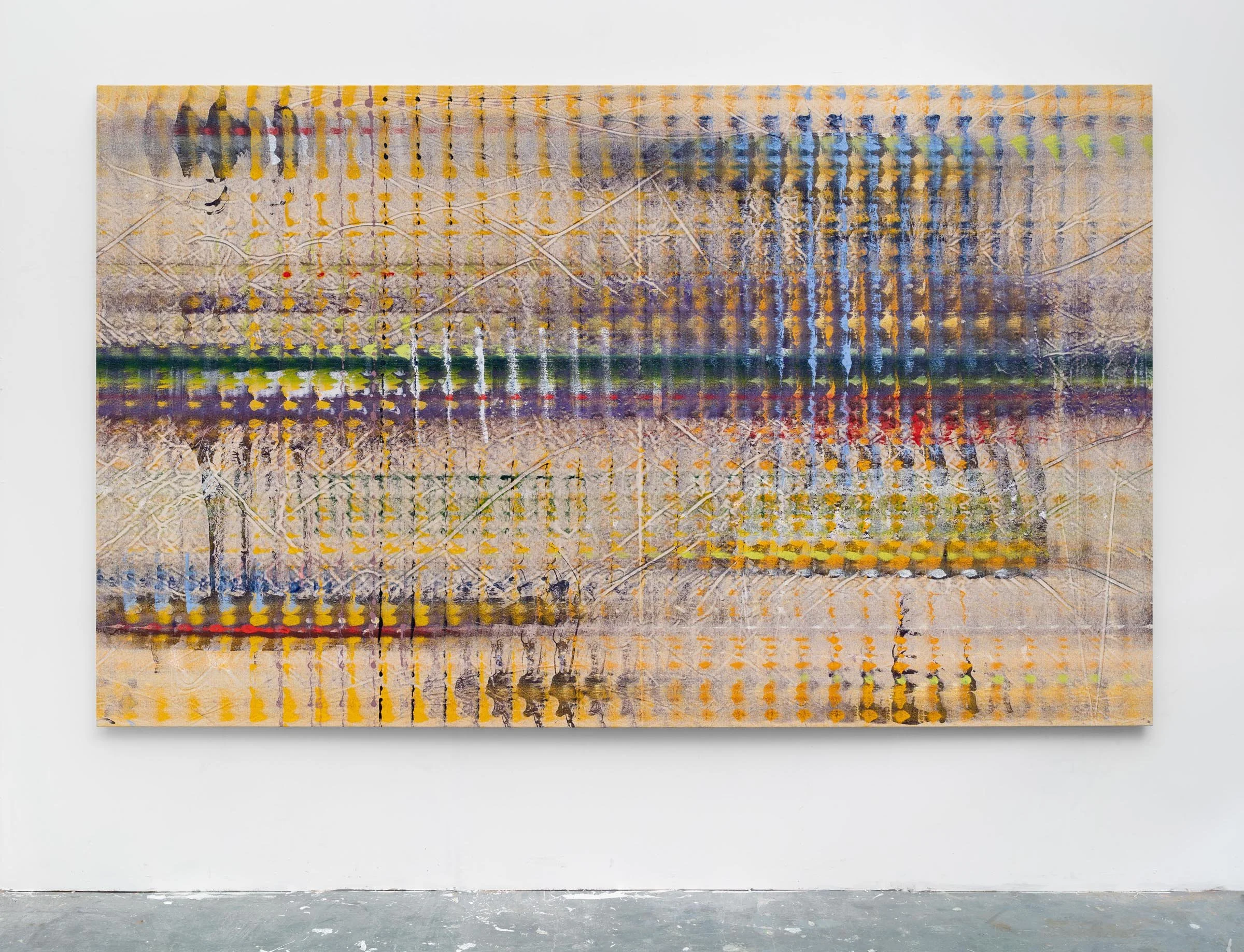
Emily Kraus
Stochastic 11 (2023)
Oil on canvas
170 x 300 cm
So the question shifts from:
What is unique to painting?
to
What does painting do differently when it exists beside photography, video, code, AI, screens?
Duchamp and the first major rupture
Duchamp’s readymade is one of the clearest breaks in the history of medium. With readymade, he did not create the object by hand. The artist selected an existing object and changed the status by naming, positioning, and framing it as art. MoMA describes Duchamp’s readymades as “mass-produced utilitarian objects” that he designated as art, disrupting older ideas of the artist as a skilled maker of original handmade objects.
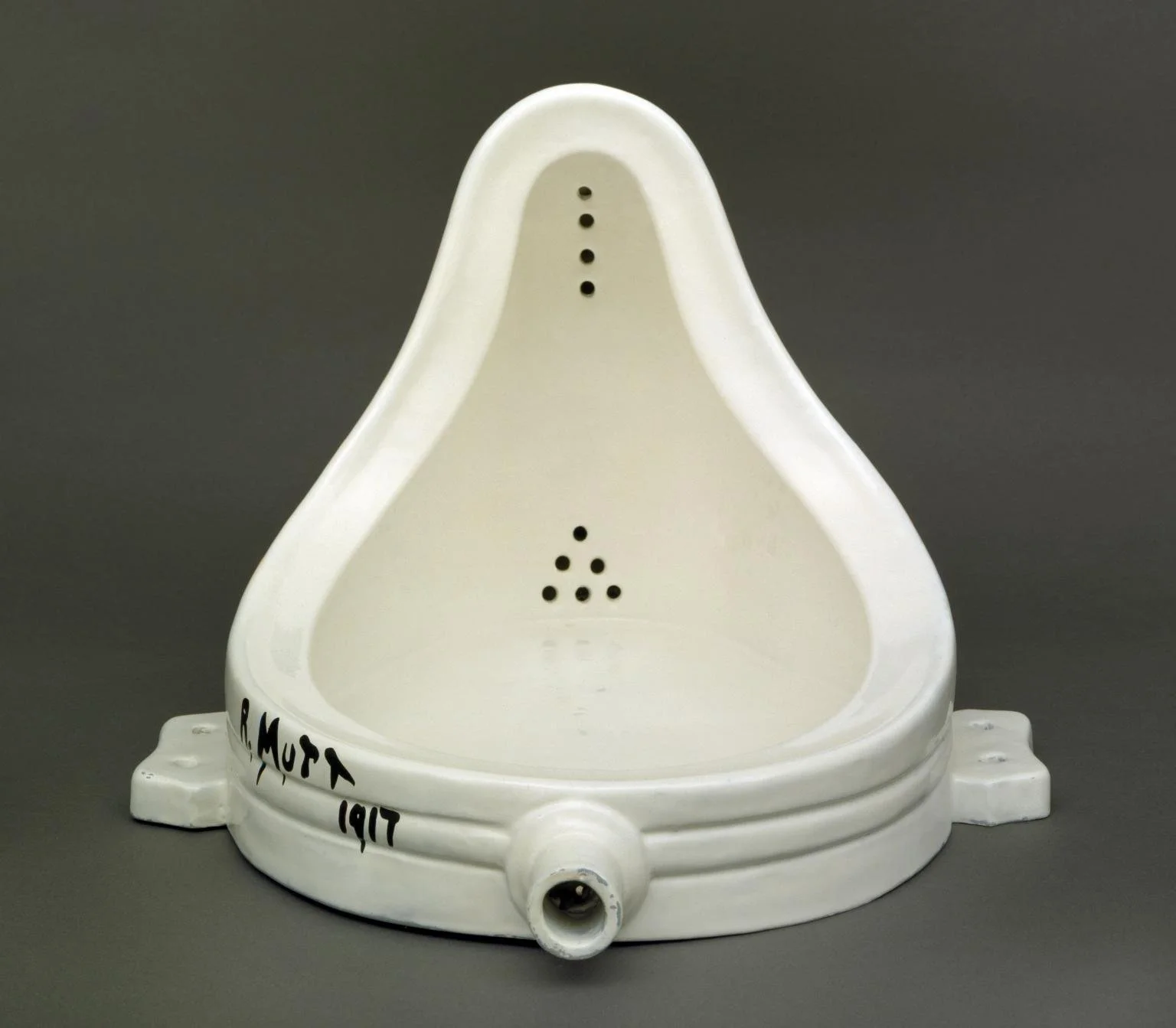
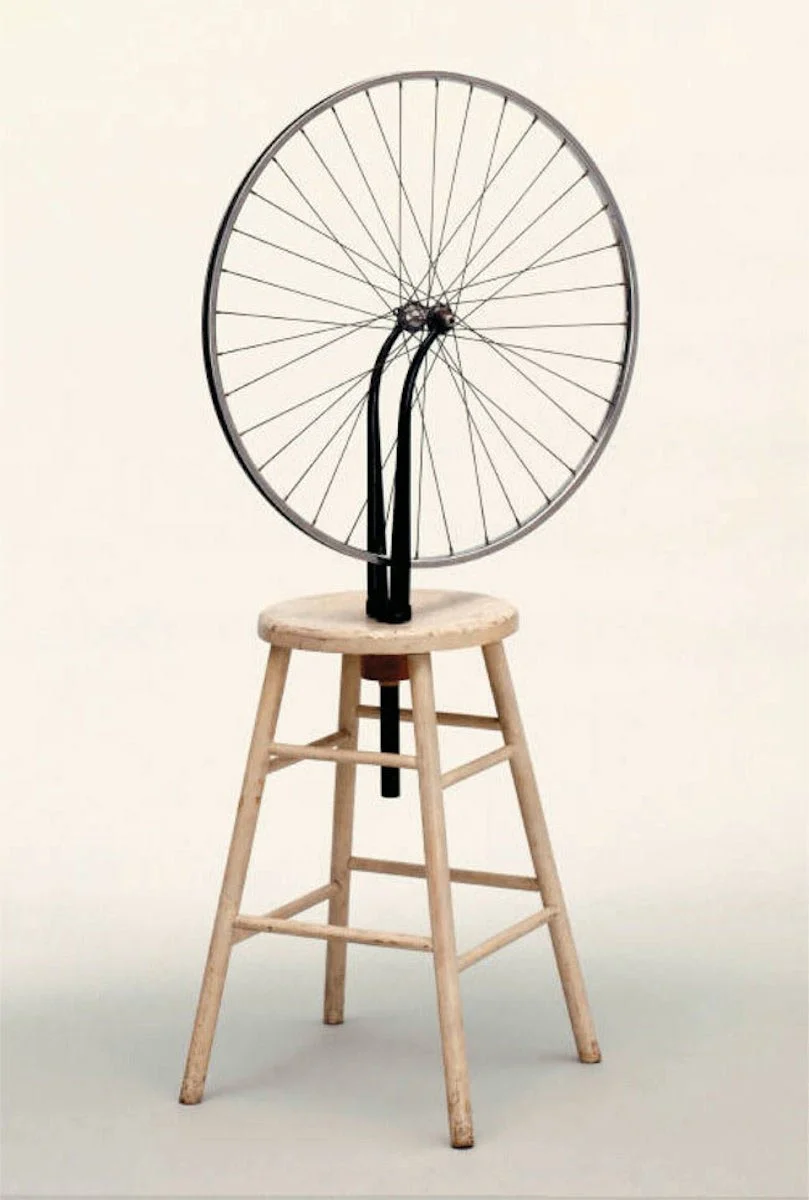
This matters because Duchamp made “choice” into a medium.
That leads directly into contemporary media questions. A screenshot, a Google Street View frame, a found surveillance feed, an AI output, a stock image, or a code on the internet can all operate in a Duchampian way. The artist does not have to make the image from scratch. The artist can reveal, redirect, isolate, or reframe an image already produced by a system.
This is important for internet based work because the internet is full of so called “readymades”. The difference is that now the readymade is not only an object. It can be a feed, a search result, a livestream, a webcam, a map view, or an image circulating without clear authorship.
The internet turns medium into circulation
Post-internet art is not simply art that appears online. It is art made with the awareness that the internet now shapes how images are produced, seen, shared, valued, and remembered. UCCA (China’s leading independent institution of contemporary art) describes post-internet art as work made with a consciousness of the networks in which it exists, from conception and production to dissemination and reception.
That definition is important… and honestly pretty confusing at first.
It means the internet is not just a display space. It is part of the work’s structure.
A painting made today cannot fully escape the internet, even if it is handmade. It will likely be photographed, posted, compressed, reposted, sold through JPEGs, archived on a website, discovered through social media, and judged from a screen before someone sees it in person.
So the physical artwork and its digital double now exist together.
That creates this strange condition:
The object may be physical, but its social life is digital.
Painting survives in this condition by becoming aware of that split. A strong painting today can use slowness, touch, scale, surface, and material resistance against the speed of image circulation. But a weak painting may only become a prop for its online documentation. This is where my paintings fall into place, as it is not a main medium endeavor for me.
It can either resist the screen or become decoration for the screen.
Example: Nam June Paik and television as material
Nam June Paik is a useful example because he treated television not only as content, but as sculptural, cultural, and technological material.
His Electronic Superhighway: Continental U.S., Alaska, Hawaii from 1995 is a large video installation using fifty-one channels of video, closed-circuit television, custom electronics, neon, steel, wood, color, and sound. The Smithsonian describes the work as engaging the interstate highway system, cable television, and the emerging internet of the 1990s.
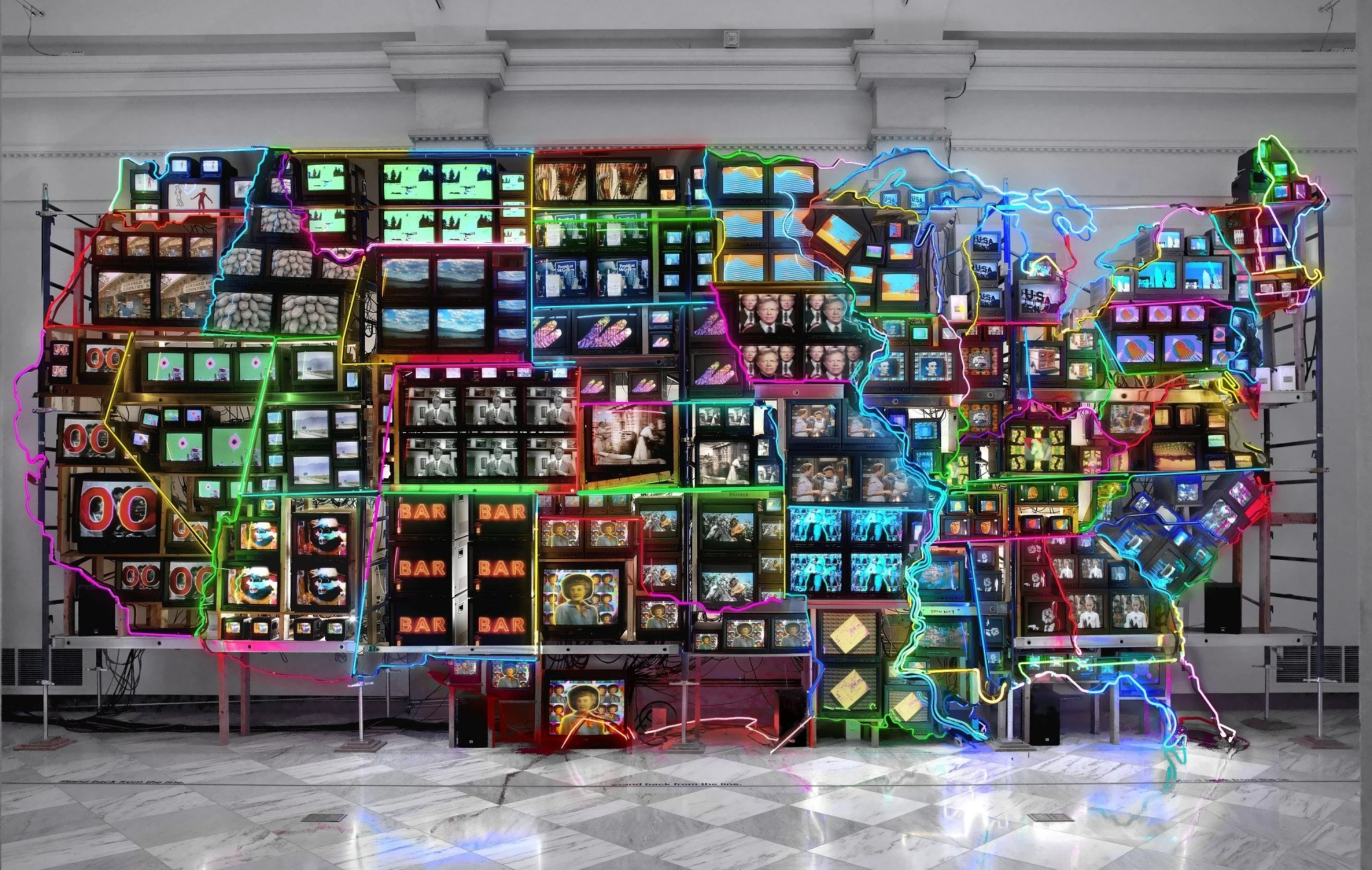
Nam June Paik / Electronic Superhighway: Continental U.S., Alaska, Hawaii from 1995
This is not just “video art.” It is media infrastructure turned into sculpture.
Paik understood that electronic communication was changing how people experienced geography, identity, and national culture. The medium was not just the TV image but the medium was the whole condition of broadcast culture.
This matters because it gives a model for how artists can work with new technology without simply illustrating it.
Example: Cory Arcangel and code as subtraction
Cory Arcangel’s Super Mario Clouds is another strong example. The Whitney describes it as a hacked Super Mario Brothers cartridge where Arcangel removed all sound and visual elements except the scrolling clouds. The medium is a handmade hacked cartridge and Nintendo NES system.
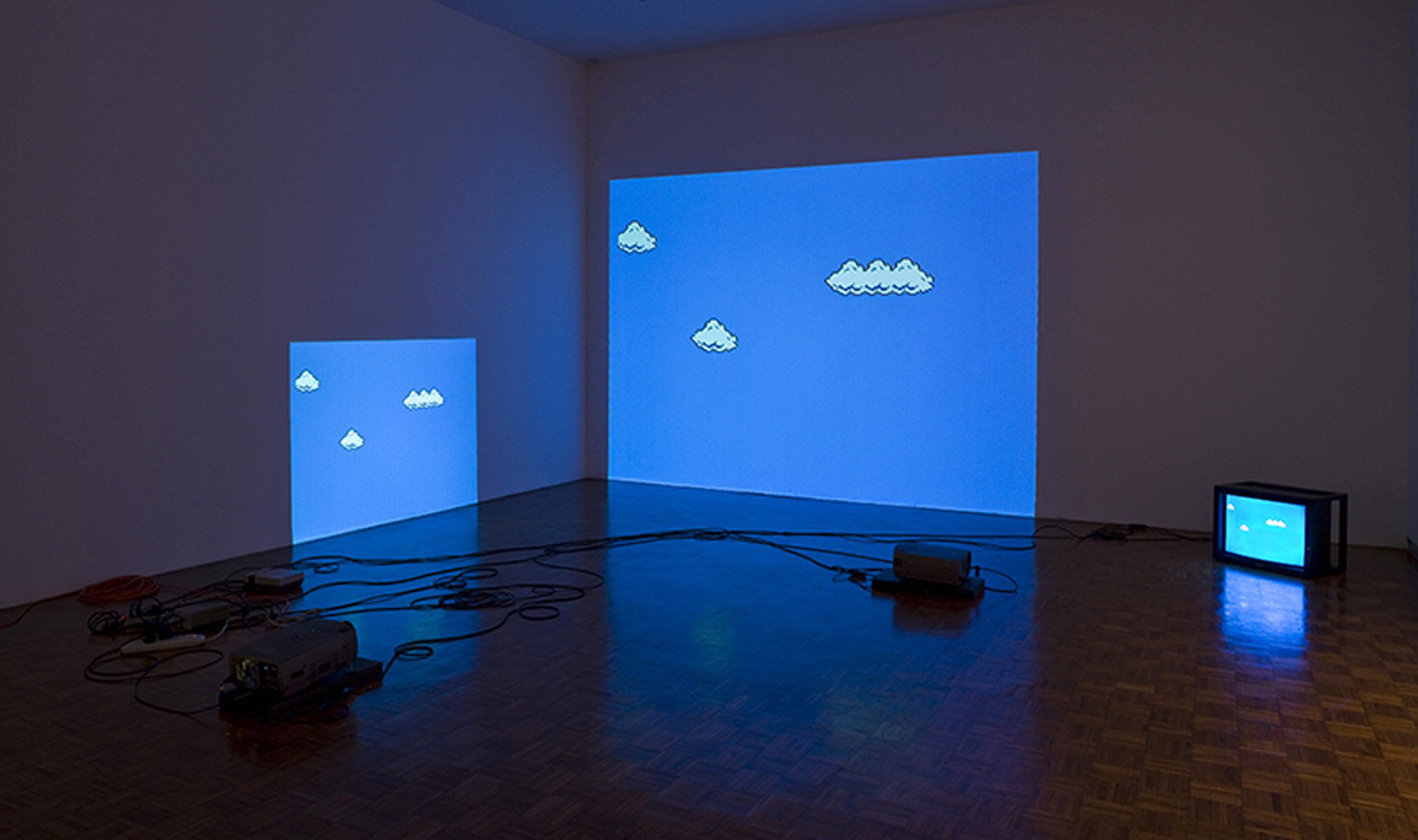
Cory Arcangel’s Super Mario Clouds
This is important because Arcangel does not use the video game as nostalgia only. He uses code as a subtractive tool.
The work asks:
How much can be removed before the source disappears?
That is almost a painterly question. It connects to abstraction, reduction, memory, and recognition. But instead of using paint, Arcangel uses a game system, code, and obsolete hardware.
The medium is not chosen because it is new. It is chosen because it holds the right kind of history.
Example: Jon Rafman and the screenshot as photography
Jon Rafman’s Nine Eyes of Google Street View is an ongoing project begun in 2008, built from images found in Google Street View. Both an archival project and a conceptual meditation on photography in the age of automated image capture.
This project is useful because Rafman is not taking photographs in the traditional sense. Google’s car-mounted cameras already took the images. Rafman’s gesture is selection, extraction, and framing.
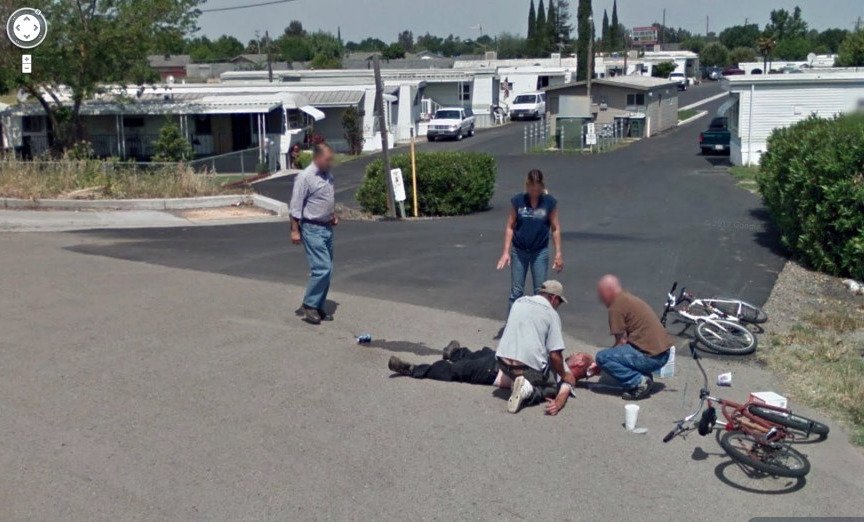
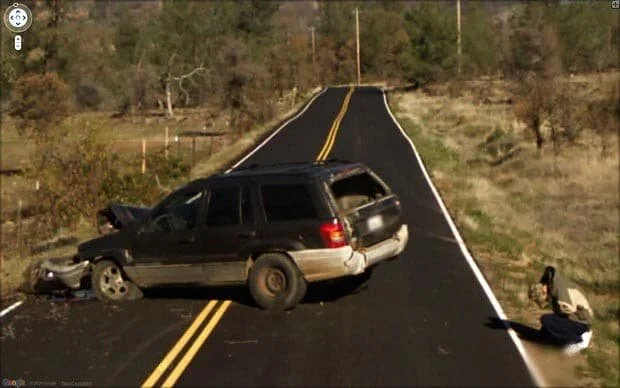
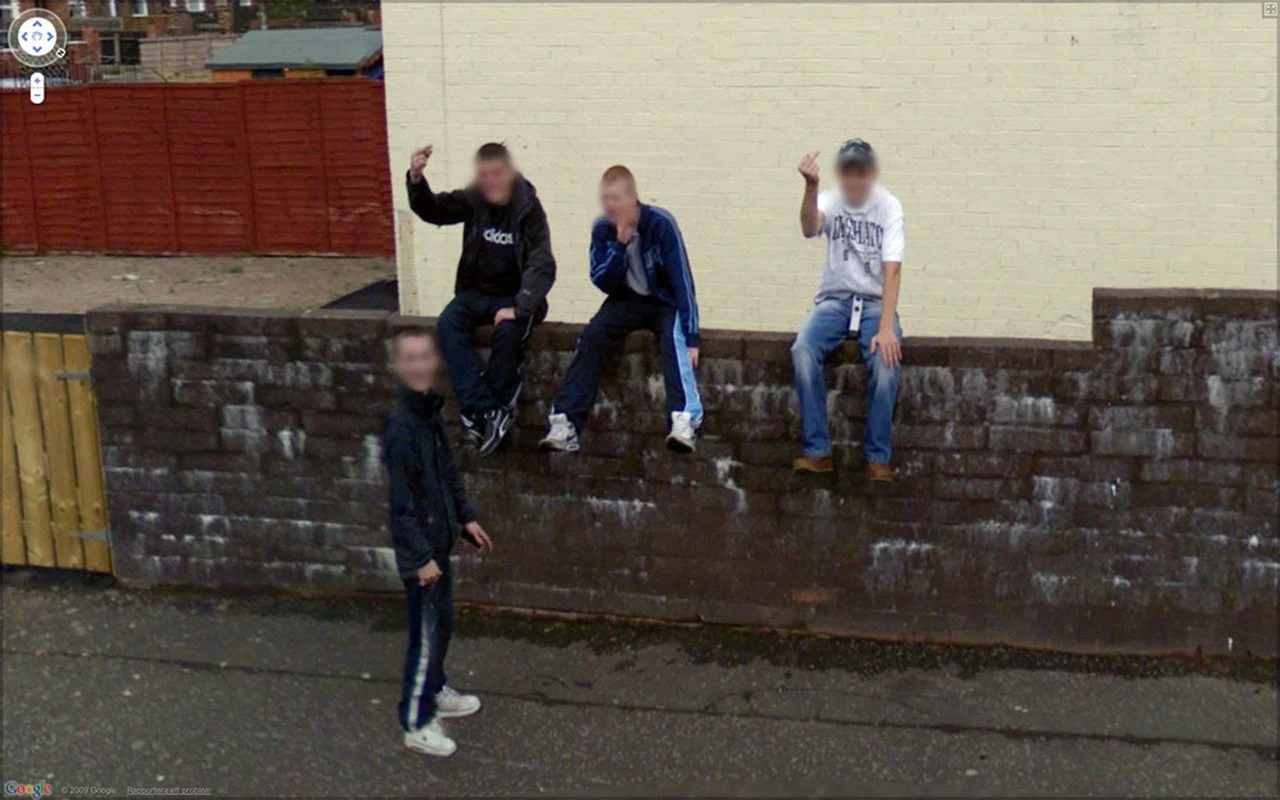
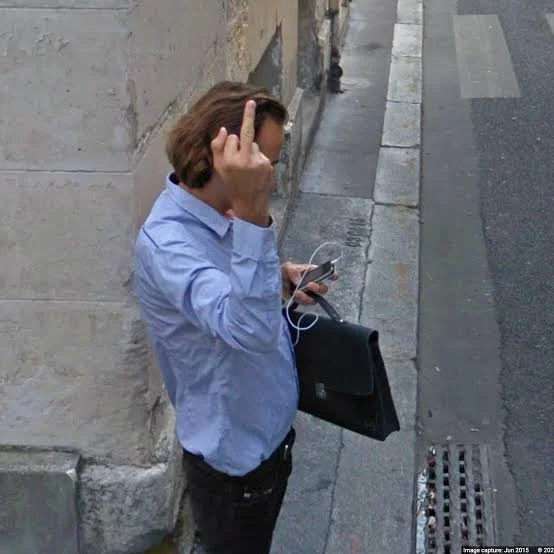
The “camera” is not held by the artist. The camera is a corporate mapping system.
That changes the meaning of photography.
This is a perfect example of expanded medium logic. The medium is not only the image. The medium is the corporate apparatus that produced the image.
For work about surveillance, this is very important. The artist does not need to invent a surveillance aesthetic. The artist’s job can be to expose the structure of that seeing.
Example: Trevor Paglen and AI systems as medium
Trevor Paglen’s ImageNet Roulette, made with Kate Crawford, is another strong example of medium as system. Paglen describes the project as a provocation that exposed racist, misogynistic, cruel, and absurd categorizations embedded in ImageNet and other AI training sets. The online version was later taken down, and the work exists as an installation in museums and galleries.
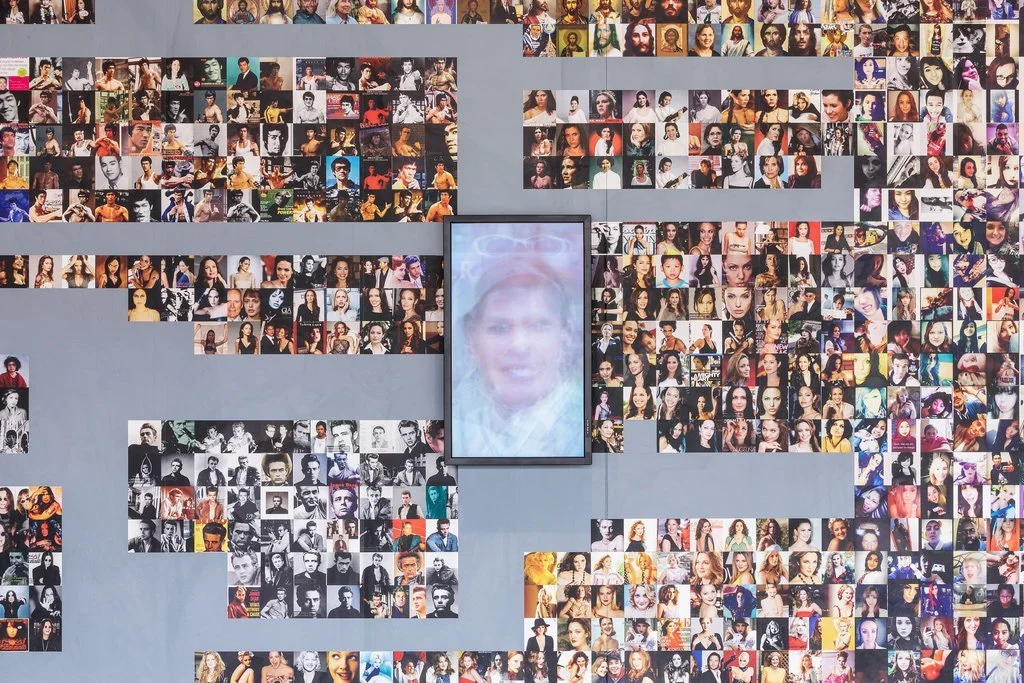
Trevor Paglen’s ImageNet Roulette
The medium is a classification system.
The work makes visible a hidden layer of image culture: not how humans see images, but how machines label people.
That is a major contemporary shift.
In a camera culture, being seen is not the end of the process. The image is also processed, tagged, searched, monetized, archived, and potentially used against someone.
So the medium is no longer just the camera. The medium is the camera plus the database plus the algorithm plus the institution using it.
Example: Beeple and the market as medium
Beeple’s Everydays: The First 5000 Days is useful because it shows how the market itself can become part of the medium. Christie’s notes that the NFT sold for $69,346,250 in 2021, setting a record for an NFT, and that “nothing besides a piece of computer code” was transferred in the sale.
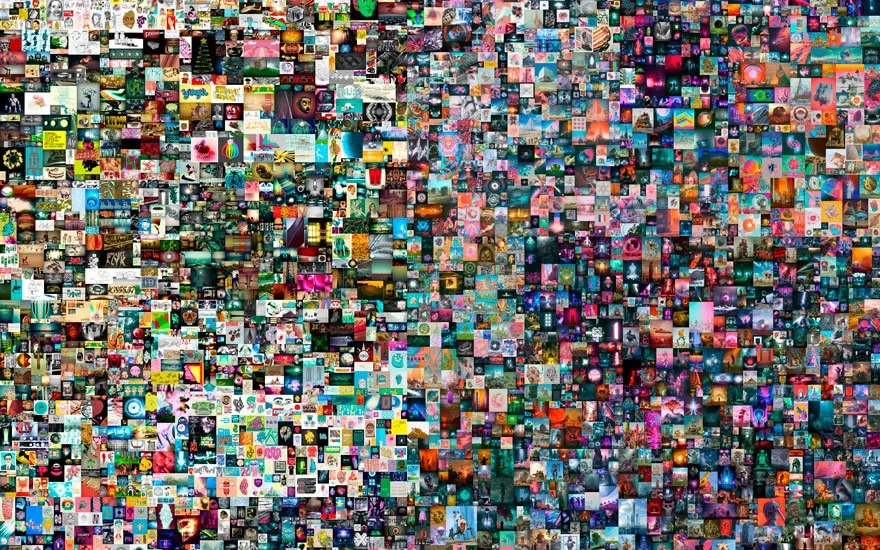
Beeple’s Everydays: The First 5000 Days
The artwork was not only a digital collage. It was also a test of ownership, scarcity, auction spectacle, crypto culture, and digital legitimacy.
This complicates the idea that digital art is infinitely reproducible. The image can circulate freely, but the token creates artificial scarcity.
That means the medium is not just the JPEG. The medium is the ownership system itself.
This also loops back to our painting theory. Painting has always been supported by object scarcity: one canvas, one surface, one owner. NFTs tried to create a similar scarcity for digital files. So the market keeps trying to turn even immaterial art into ownable objects.
This is one of the hidden forces behind why painting remains powerful. Painting is materially compatible with the art market. It is easy to own, insure, resell, and display. That does not make painting bad, but it means the artist has to be honest about whether painting is being chosen for conceptual necessity or for market convenience.
Stronger theory
The strongest theory is this:
In contemporary art, the medium is not a container for the idea. The medium is one of the idea’s main arguments.
A painting about surveillance says one thing.
A live surveillance feed says something else.
A painting copied from a surveillance feed says another thing.
A room-sized LED panel showing surveillance footage says something else.
The subject may be similar, but the medium changes the ethics, the politics, the speed, the body, the viewer, and the artwork’s relationship to power.
That is why “why this medium?” is now one of the most important questions an artist can ask.
Painting after expanded media
Painting still makes sense, but not because painting is automatically superior, timeless, or pure.
Painting makes sense when it does something that the other available media cannot do in the same way.
Painting can:
slow down an image that normally moves too fast
turn a disposable digital image into a physical encounter
make the viewer aware of time, labor, and touch
create distance from the endless flow of screens
translate tech imagery into bodily experience
make an image feel remembered rather than merely captured
resist the smoothness of digital production
expose the gap between image and material
turn documentation into presence
But painting fails when it only repeats the look of contemporary images without transforming their condition.
A painted screenshot is not automatically interesting..
A painted internet image is not automatically contemporary.
The question is whether painting changes the image’s meaning by making it physical, slow, unstable, damaged, enlarged, intimate, or strange.
Painting should not just reproduce digital culture. It should metabolize it.
Connection to my work
This theory connects directly to my interest in CCTV, open camera feeds, internet curation, painting, and surveillance.
The most important question is not: Should this be a painting or a digital piece?
The better question is: What does each medium reveal about being watched, archived, and turned into an image?
Working principle
A medium should be chosen because it creates the right kind of pressure.
Use painting when the image needs time, body, surface, and emotional drag.
Use video when the image needs duration, instability, sequence, or live behavior.
Use installation when the viewer needs to physically enter the system.
Use internet sources when the work is about circulation, access, distance, or anonymous looking.
…Use the universe when each is needed within…
Painting still makes sense after the internet, AI, video, but only when painting is not used as a default. A painting today has to answer why the image needed to become slow, physical, handmade, and object-based instead of remaining a screen image, a feed, a file, a dataset, or a system.
For my work, the strongest direction is not to prove that painting is still valid. The stronger move is to treat every medium as a different way of showing how images are produced, watched, circulated, and remembered. Painting can be part of that, but only when it transforms the image instead of simply copying it.